Showing posts with label fashion exhibition. Show all posts

Friday, 22 February 2019

Delicious Dior

I had the great pleasure of going to the highly anticipated Dior exhibition at the Victoria and Albert museum last week. The V&A has become well known for its impressive temporary exhibitions and I knew this one was going to be good!


Dior's first collection was launched in February 1947 with the now iconic New Look which used a silhouette of full skirts and nipped in waists. This was seen as very extravagant at the time when rations on fabric were still in place. This was the outfit that opened the exhibition.


In 1991, when John Galliano was designing for Dior, he created the outfit below which echos the style of the New Look, with a modern twist.


Christian Dior's designs played with structure and proportion to create clothes that powerfully expressed an attitude. He carefully considered movement, with each garment needing careful construction and workmanship.


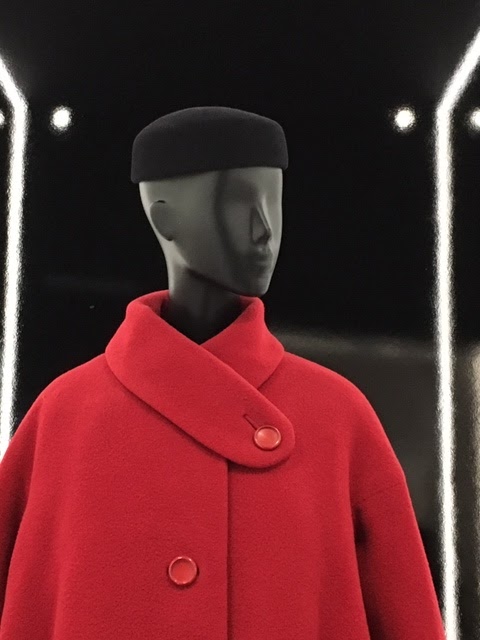
Continuity between collections along with headline-grabbing looks meant the sustainability of the fashion house. I love the simple drama of this stunning red coat.

Dior often used historic references in his designs - the tight waists of the mid-19th century styles and the sumptuous silks of the 18th century. 
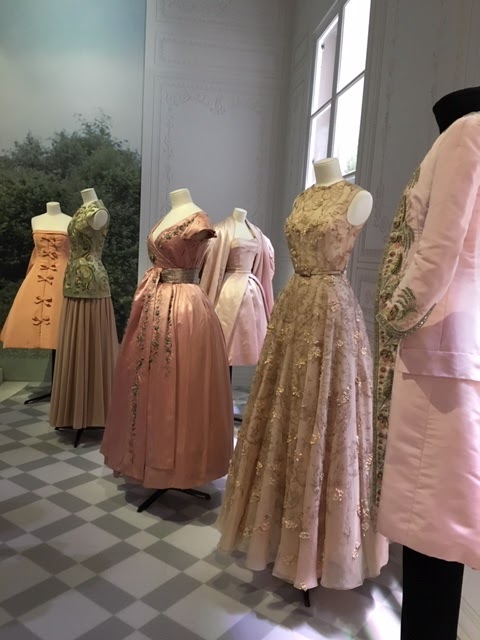

Many of the dresses created by Dior and his successors drew on the lavish style of the court dress worn at Versailles. The dress below, designed by Galliano uses gold thread, blue feathers and Swarovski crystals.


As a young man, Dior travelled a lot and from the launch of his first collection he took inspiration from the architecture, landscapes, art and textiles or different countries and cities.


This outfit was inspired by Egypt and uses pieces of turquoise leather to create a scale effect.


Asian countries also influenced Dior, from Japanese kimonos above, to Chinese silks below.


I love this stunning red coat designed by Raf Simons. The style is a nod to the full skirts and nipped in waist of the New Look and uses the colour red of the coat from his first collection. I love the inclusion of the ultra modern metal belt.


The outfit below uses a special technique to concertina the fabric of the skirt into tiny pleats.


The bow on the outfit below, designed by Gianfranco Ferre, is stunning. No need for bright colours as it speaks of itself.


The ateliers, or workrooms, are at the heart of Dior and it is where ideas are turned into exquisite haute couture designs. Once a design has been selected, it is taken to the atelier where a toile was made. This is a prototype garment and is usually made in white cotton fabric. This is when the fit and proportions etc are irned out in the toile garment before the real garment is made and this room in the Dior exhibition showed a number of toiles.


The toile below shows an intricately folded collar design with a hand drawn floral motif that has been pinned over the top to show where embroidery detailing would be used.


The purple garment below is the finished item.


The final room in the exhibition is called The Dior Ball and showcases what Dior does best - evening dresses. Throughout his career he enjoyed designing clothes to be worn at balls and fancy dress parties where he could indulge his imagination and show off the skills of the haute couture ateliers.


His extravagant creations combined skilful draping, intricate embroidery and stunning embellishment and he loved a bit of gold!


Dior's evening gowns often took finery and excess to the extreme.


Dior's successors have continued the excess that has become synonymous with the fashion house.


All these creations are housed in an ever-changing light show where day becomes night and opera and classical music set the scene.
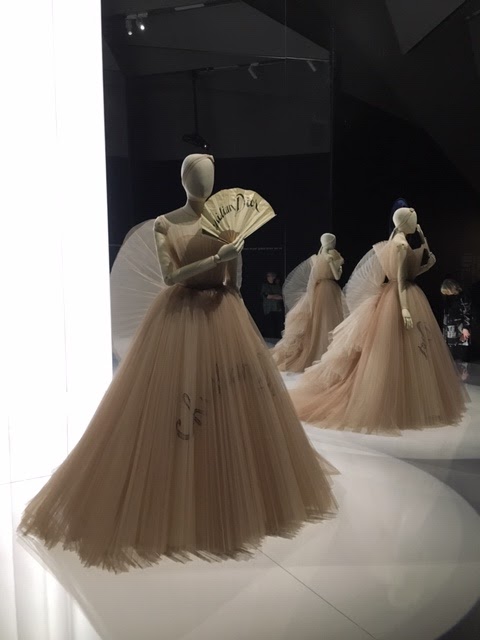

The final creation in this show is an ethereal gown which sums up the style of Dior.


Friday, 27 July 2018

Amazing Alaia

The other day I made a pilgrimage to the Design Museum in Kensington to visit the exhibition of Tunisian-born Azzedine Alaia. He was a designer well known for his beautifully structured haute couture collections and was someone who generated excitement and respect throughout his life.


Alaia was best-known for his sensuous, body-hugging forms and he loved to experiment with the latest stretch materials and tailored leathers. On entering the exhibition you are greeted by this stunning collection, named 'Sculptural Tension'. Alaia originally trained as a sculptor and he always considered his clothing in sculptural terms.


Up close, you can see how he has used silver studs to embellish the inside of the pleats to this animal skin print outfit.


Chainmail links are like chiffon on the dress below, created in 2017 in the last months of Alaia's life.


Alaia used leather constantly throughout his career and his use of it was ground breaking. The 'Revolutionary Skins' section of the exhibition shows one of the first leather garments to gain attention in the fashion world. It's a leather coat from 1981, where steel eyelets were used as the only embellishment, and the powerful style of the coat was to define the style of the coming decade.


The dress below shows how Alaia could use leather in a way that it emulated other lighter fabrics such as chiffon and silk. The ruffle at the shoulder and the beautiful darts at the waist make it hard to believe that this is made from leather.


The 'Exploring Volume' section of the exhibition looks at Alaia's fascination with fashion history and the influences he took from the 17th and 18th centuries. He has re-imagined them using contemporary technologies and attitudes to the body.


As well as having an interest in creating form-fitting shapes, Alaia was also interested in volume and creating sculptural shapes that could redefine a woman's body and he pushed the idea to the extreme. Look up close at the bottom of this dress and you see the amount of fabric that has been expertly inserted into the seam, with an air of lightness and ease.


The dress below has a wonderful form-fitting bodice.


See how each pleat is perfectly uniform. The mirrored plinths make it easier to see the detail.


Black was Alaia's favourite colour and he would often use it on its own, combining a number of fabrics in a single garment to explore their different textural qualities. The section called 'Black Silhouettes' highlights this. I loved the leather dress below where pleats have been created in leather and edged with gold beads.


The simple use of black often meant that the dress became a graphic silhouette and you had to look up close to appreciate the workmanship that has gone into it.


Alaia gave his ideas form by draping, cutting and pinning fabric directly onto the statuesque models he worked with. He combined rigorous technical skills with an understanding of how women want to feel. This is beautifully shown in the red dress below which was in the 'Fragility and Strength' section of the exhibition.


Alaia was obsessed with testing the properties of materials. He gave soft fluidity to leather, and here he gives chiffon strength. These dresses are as powerful as a tailored suit, showing Alaia's technical ability in his use of the fabric. Chiffon is a very delicate fabric and can be difficult to work with but he makes it look effortless.


The final and most dramatic section to the exhibition is the 'Wrapped Forms' section that focuses on his use of stretch fabrics.


These dresses seem simple but each band of fabric is precisely engineered and cut to specific dimensions. The dresses were inspired by Egyptian mummification and join Western and Eastern traditions.


This wonderful exhibition is open until 7th October 2018. I highly recommend a visit.


Friday, 22 June 2018

Fashioned from nature

A recent visit to the 'Fashioned from Nature' exhibition at the Victoria and Albert museum was very inspiring and insightful as it covers centuries of fashion that has been inspired by the natural world. It also shows how the fashion industry has plundered the natural world, to devastating effect. It includes stunning embroideries, intriguing techniques and beautiful prints and leads to a slightly uncomfortable feeling where you are appreciating the fashions of the past but also realising the effect that they have had on nature.

The silk dress below is from 1733 and uses a stunning print inspired by nature, depicting fantastical, over-sized fruits and flowers. The white ground sets off the vibrant colours.


The exhibition continues through to the 18th century where manufacturing came into mass production and shows the principle fibres being produced at that time (flax, cotton silk and wool) and how they were made. It also shows how man's greed for feathers, furs and even bones - such as whalebone that was used for corsets - was incorporated into fashion of the time. The dresses below use pretty floral prints but also show how much fabric was used in a garment. I was intrigued by how much fabric could be gathered into such a small waist.


The international trade in exotic materials such as feathers and fur increased dramatically during the 19th century and London was a hub for the sale of both. Concerns about the brutality of the trades meant that local campaigns were established to oppose the trade. 


Items made from feathers included dramatic shoulder wraps and large feather fans.


Colour plays a large part in the novelty and change of fashion and raw materials with natural beauty were prized for clothing and accessories. The earrings below were made from the heads of Honeycreeper birds, and were very popular in the late 19th century.


Among the many birds imported to ornament dress, the ones with iridescent feathers were the most desirable. Peacocks, honeycreepers and hummingbirds had stunning natural colours that changed in the light.


As well as feathers, beetle wings were also used to decorate dress. Over 5000 green beetle wings were used to decorate this dress to create a natural jewel effect.


The starling on the hat below had its feathers added to with feathers from another bird to suggest a larger, more exotic species. On the right you can see an X-ray of the hat.


The 19th century saw new methods of transport and the spread of cheaper books and periodicals as well as the opening of museums which created greater opportunities for people to learn about nature. The book below shows a stunning imprint of sea life which would have inspired many textile designers.


The fluctuating supply of raw silk meant that a search for man-made alternatives was needed. By spinning glass it creates a soft, fine flexible thread that only breaks when strong pressure is applied to it. Glass is cheaper than silk and the colours don't fade. It is also waterproof and fire-proof and was manufactured for furnishing from the 1830s. Below is a sample of a skein of fabric made from spun glass.


The exhibition continues upstairs where it shows how more modern techniques were used in the production of fashion as well as contemporary innovators who are directly addressing the issues caused by the fashion industry. The two dresses below were early examples of synthetic materials made to look like natural fibres, but they used harmful chemicals and treatments. 


The dress below is designed by John Galliano and was inspired by Christian Dior's vision of women as seductive hot-house flowers.The garment uses a vibrant purple colour with red gloves and incorporates ruffling and tulip petal skirt. Even the belt and hat were inspired by florists materials.


This Philip Treacy 'Windswept Veil' was inspired by high winds yet at the same time the feathers seem to grow around the head and form an organic green curtain. There is a stunning delicacy to it.


The dress below was designed by John Paul Gaultier in 1997 for his 'Russia Collection', and it appears to have a leopard skin draped over the front of it. But look closer....


....and you will see that the dress is made up of thousands of beads that create the leopard print. The gown took over 1000 hours to create! See how the head of the leopard creates the bodice of the dress.


Alexander McQueens last fully realised collection imagined a world of climate change. His collections often expressed his concern with ecological awareness and in this collection the models wore complex digital prints of amphibious skins.


The Gucci handbag below uses a menagerie of creatures and includes a metal fox head and two stag beetles that have been silk-screened in gold onto calf skin. The designer was inspired by 'Theatre of Insects', a source book that inspired some of the 17th century textile designs.


Designer Michelle Lowe-Holder sources end-of-line and vintage haberdashery to create her handmade jewellery. This dramatic ruff is made from end-of-line ribbon.


Scientists in Sweden and Britain created this wearable paper made from unbleached wood pulp, finished using natural dyes. Energy and chemicals are reduced at every stage.


Diane Scherer trains the roots of plants to grow in intricate structures, creating a 3D textile. When the roots are fully grown, she removes them from the soil and cuts off the plant stems. See the dress below left and the process, below right.


I highly recommend a trip to this museum to appreciate the good and bad side of fashion and to see how much we have progressed over time.


Popular Posts